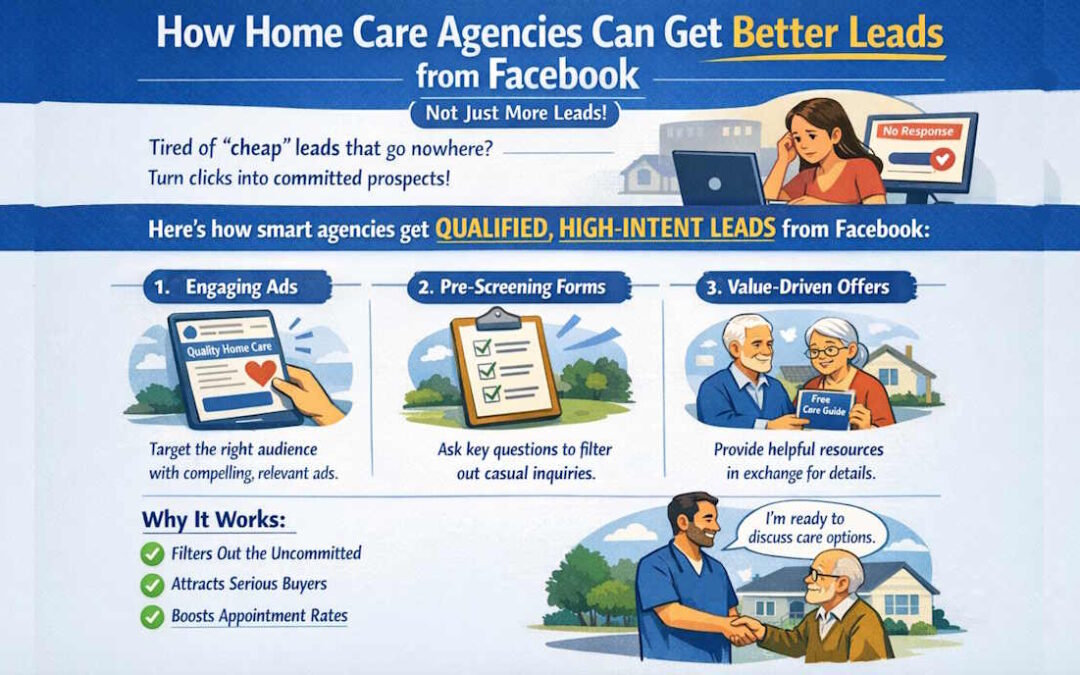
If you’re running Meta / Facebook ads for a home care agency or senior service company, you’ve likely learned a hard truth: most “cheap” leads aren’t serious buyers.
They click, fill out a form, and then disappear—or worse, they were never truly looking for care in the first place. The solution isn’t spending more money. It’s engineering commitment into your funnel so only motivated prospects raise their hand.
Here’s how the most successful agencies use Facebook to generate qualified, high-intent leads—and why it works.
More Questions Create Better Leads
Of course you must first target the right audience and write compelling, relevant ads. But beyond that is an insight that few home care agencies are aware of.
Many agencies mistakenly believe that fewer questions on signup forms equals more conversions. That’s true if your goal is volume. But if your goal is clients who answer the phone, book consultations, and choose care, you must do the opposite.
When you ask more questions on your lead capture form, several powerful psychological effects occur. First, commitment bias kicks in. People who invest time answering questions are far more likely to follow through because they’ve already made a small internal decision. Second, self-qualification happens naturally. Casual browsers drop off while serious decision-makers stay. Third, a thoughtful intake process signals professionalism and trust, which is critical when families are making decisions for elderly loved ones.
Instead of attracting everyone, you’re filtering for families actively seeking care, actual decision-makers, and people comparing providers rather than “just looking.” And yes, the cost per lead will be higher, but the result is fewer leads, higher close rates, and far less stress for your team.
What Questions to Ask on Facebook Lead Forms
Effective Facebook lead forms for home care and senior care services should screen for readiness without feeling intrusive. The goal is not to interrogate but to create meaningful engagement.
High-performing questions include asking when care is needed, who the care is for, what concerns the family most right now, and whether they’ve spoken with a home care agency before. These questions create productive friction. They eliminate tire-kickers while surfacing emotional urgency, allowing your sales team to respond with empathy and clarity.
Stages of the Sales Funnel
Not every prospect is ready to hire today. Facebook, especially with its new Andromeda algorithm, works best because it reaches people at different levels of awareness and intent.
At the top of the funnel, prospects are problem-aware but not ready to act. The goal here is education and emotional resonance. Headlines like “Noticing Mom Needs More Help?” or “You Don’t Have to Do This Alone” validate concern without pushing a sale. These ads build trust and familiarity.
In the middle of the funnel, families are actively exploring options. This is where authority matters. Headlines such as “How to Choose the Right Home Care” or “Avoid Costly Elderly Care Mistakes” position your agency as a guide rather than a salesperson. You become the advisor families feel safe listening to.
At the bottom of the funnel, prospects are ready to decide. Messaging should focus on reassurance and relief. Headlines like “Compassionate Care Starts Here” or “Get Help for Your Loved One Today” speak directly to urgency, safety, and peace of mind—the emotional drivers that push families to act.
Why a Lead Magnet Helps
A lead magnet turns Facebook ads from interruptions into invitations. Instead of immediately asking for a call, you offer value first. This might be a care planning guide, a checklist for choosing home care, or a simple PDF outlining signs a senior may need help.
Psychologically, this works because it positions your agency as a helper rather than a seller. It allows you to capture leads earlier in the decision cycle and warm these prospects before your team ever calls. People who complete a form and download a resource are significantly more serious than cold leads. They’ve already engaged, learned, and built trust.
When you combine thoughtful ad messaging, funnel-stage-specific headlines, higher-commitment lead forms, and educational lead magnets, you don’t just get leads. You get clients who are ready to choose.
Sales calls become calmer and more productive. Conversations feel collaborative rather than defensive. Close rates increase, and burnout decreases because your team is no longer chasing uninterested prospects.
How Savvy Senior Marketing Helps Agencies Win with Facebook
At Savvy Senior Marketing, the focus isn’t on cheap leads. It’s on building systems that attract qualified decision-makers.
We design Meta / Facebook ad campaigns that align with the senior care buying journey, write psychology-driven ad copy that speaks to real family concerns, and build lead forms that filter for seriousness and intent. We also create high-converting lead magnets and continuously optimize campaigns to improve lead quality, not just volume.
The goal isn’t more names in your CRM. The goal is more families choosing your care.
If you’re ready to stop wasting time on unqualified leads and start having better conversations with serious prospects, we can build this system for you—end to end.
Why not use this marketing method to bring in more clients and customers? Get in touch with us at Savvy Senior Marketing by making an appointment for a free 20-minute phone consult, or by sending us an email.